All About the Kids!
Ask any camping parent: the best stories usually start with “Remember that time the kids…” Camping with kids is messy, loud, hilarious, and absolutely worth it. Out there under the trees, your schedule loosens up, imaginations switch on, and suddenly you’re not just getting through the week — you’re on an adventure together. This page is your playbook for keeping the fun high, the stress low, and the memories big around Camp Coach Joe.
Before You Go: Prep Tips
Successful kid camping starts before you even pull out of the driveway. The goal: make them feel like part of the team, not just along for the ride.
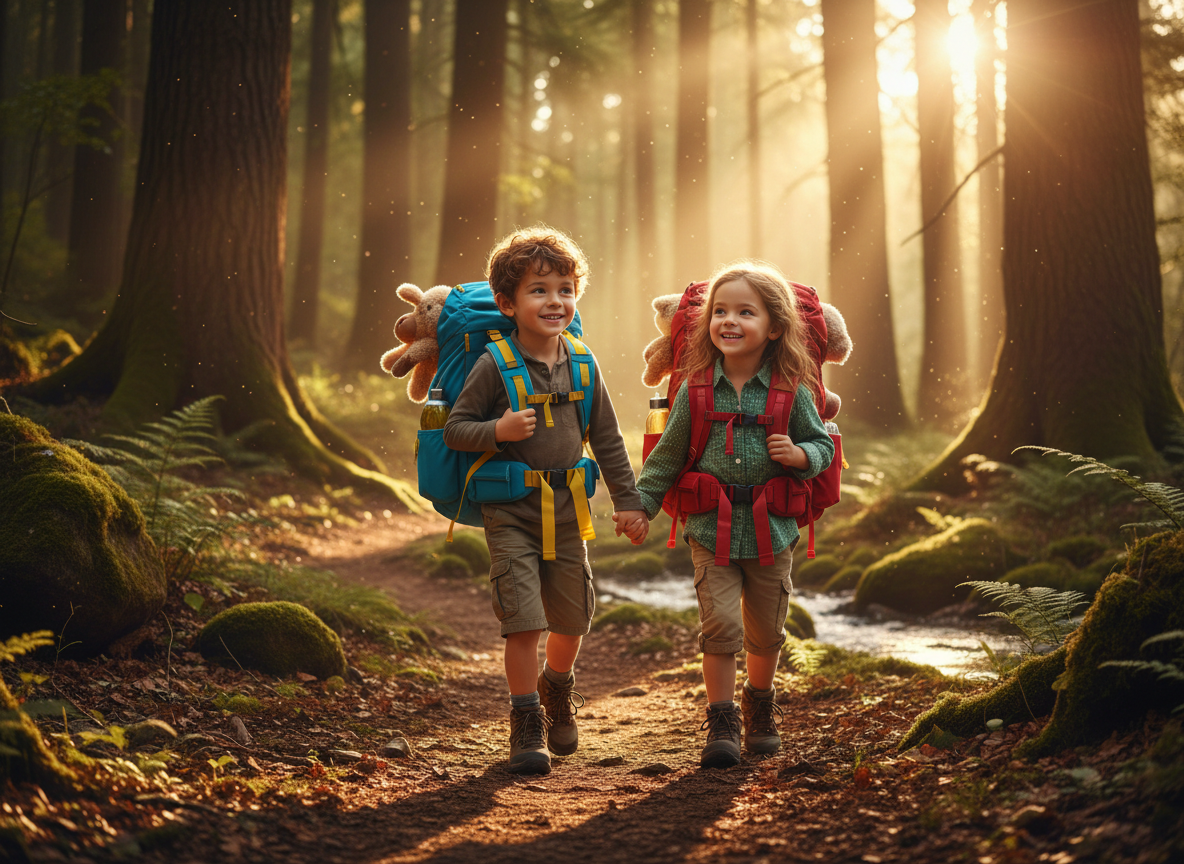
- Let them pack a mini backpack. Give each kid a small daypack and a simple list: sweatshirt, water bottle, hat, book, stuffy. You still double-check, but they get the win of “packing my own bag.”
- Say yes to one “special item.” A favorite toy, journal, or snack they only get at camp makes the trip feel extra special. Just set ground rules: it has to fit in the backpack and can’t be something that will cause tears if it gets dirty.
- Try a backyard or living room campout first. For little ones, a practice night close to home helps them get used to sleeping in a tent, hearing night noises, and using a headlamp instead of a hallway light.
- Explore the campground together ahead of time. Pull up a map or photos online and point out the lake, trails, bathrooms, and playground (if there is one). Let your kids help pick a hike or spot they want to explore.
- Print or draw a simple campsite map. Older kids love “being the navigator.” Sketch where your tent, fire ring, picnic table, and bathrooms are, and let them practice finding their way around on paper first.
Setting Up Camp: Give Kids a Job
Kids behave better when they feel useful. Setting up camp is the perfect time to channel all that “helping” energy into real jobs.
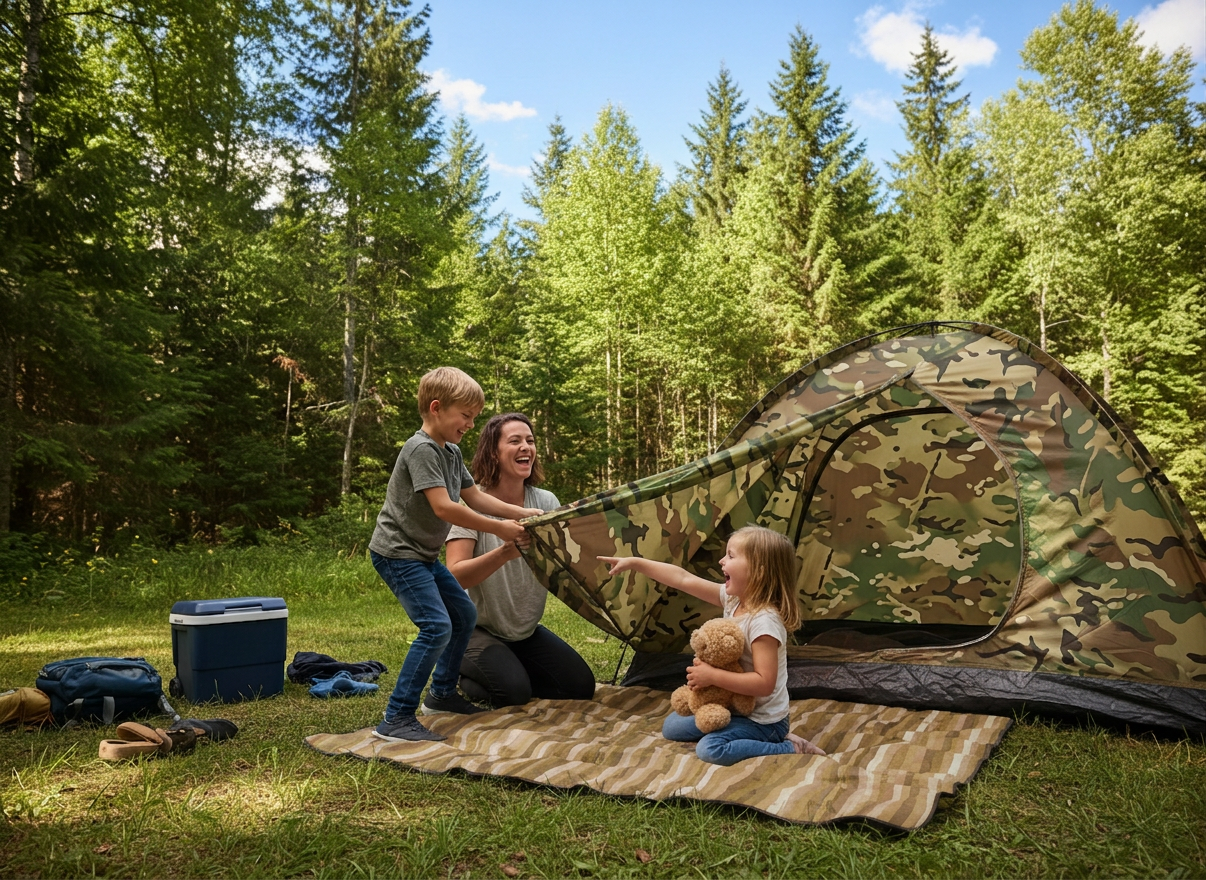
- Match jobs to ages. Little kids can gather small sticks for kindling, carry camp chairs, or help unroll sleeping pads. Bigger kids can pump up pads, sort gear, or be in charge of the trash bag.
- Turn setup into a game. Time how fast everyone can set up their sleeping bag or who can neatly roll theirs the best. “Team Tent” vs. “Team Kitchen” can turn chores into friendly competition.
- Let older kids tackle “real” tasks. Pre-teens and teens can help with tent poles, reading instructions, and prepping food (washing veggies, mixing pancake batter, building foil packet dinners). Supervision required, but trust them with meaningful jobs.
Activities & Games to Keep Kids Busy
Once camp is set up, the “Now what?” questions start. Here are simple, low-effort ideas that keep kids exploring instead of asking for your phone.
- Nature scavenger hunt. Make a quick list: a bird, an ant, a smooth rock, something that smells good, animal tracks, three different leaves. Snap photos or draw what you find instead of taking things home.
- Glow-in-the-dark games. Glow sticks, bracelets, and necklaces turn dusk into a party. Try flashlight tag, glow-stick ring toss, or “follow the glowing leader” along the campsite loop.
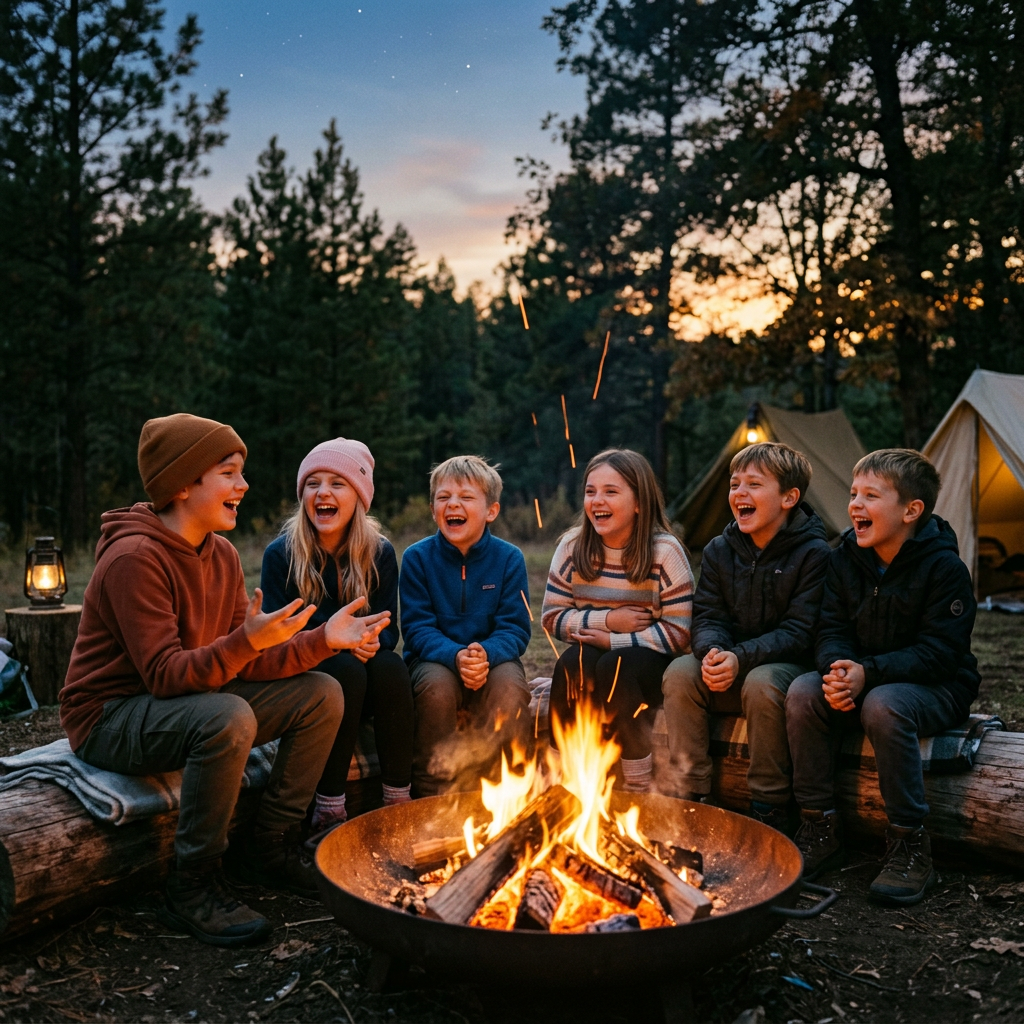
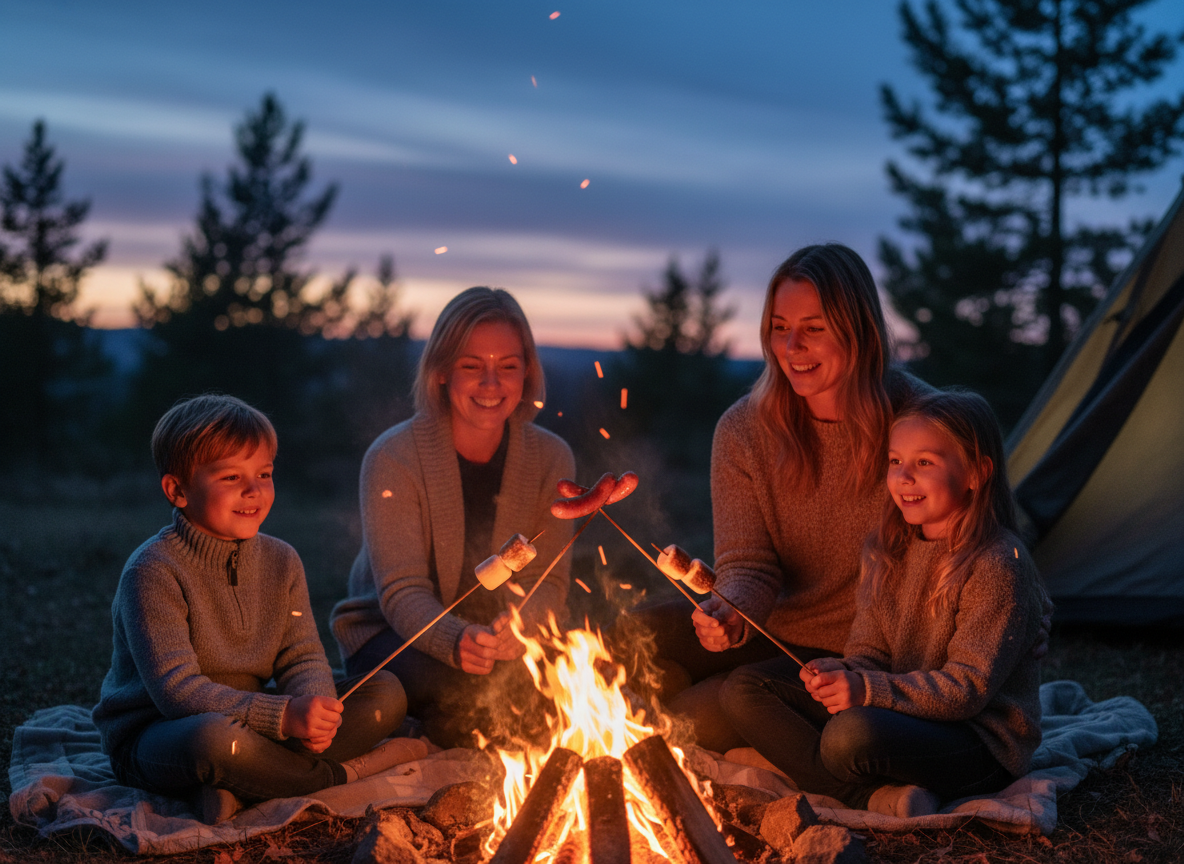
- Campfire story circle. Take turns telling “one-sentence-at-a-time” stories where each person adds a line. Bonus points for silly sound effects and totally ridiculous plot twists.
- Rock painting & nature journaling. Pack a small kit with washable paints or markers and let kids decorate rocks (that stay at camp) or sketch what they see, hear, and smell in a simple notebook.
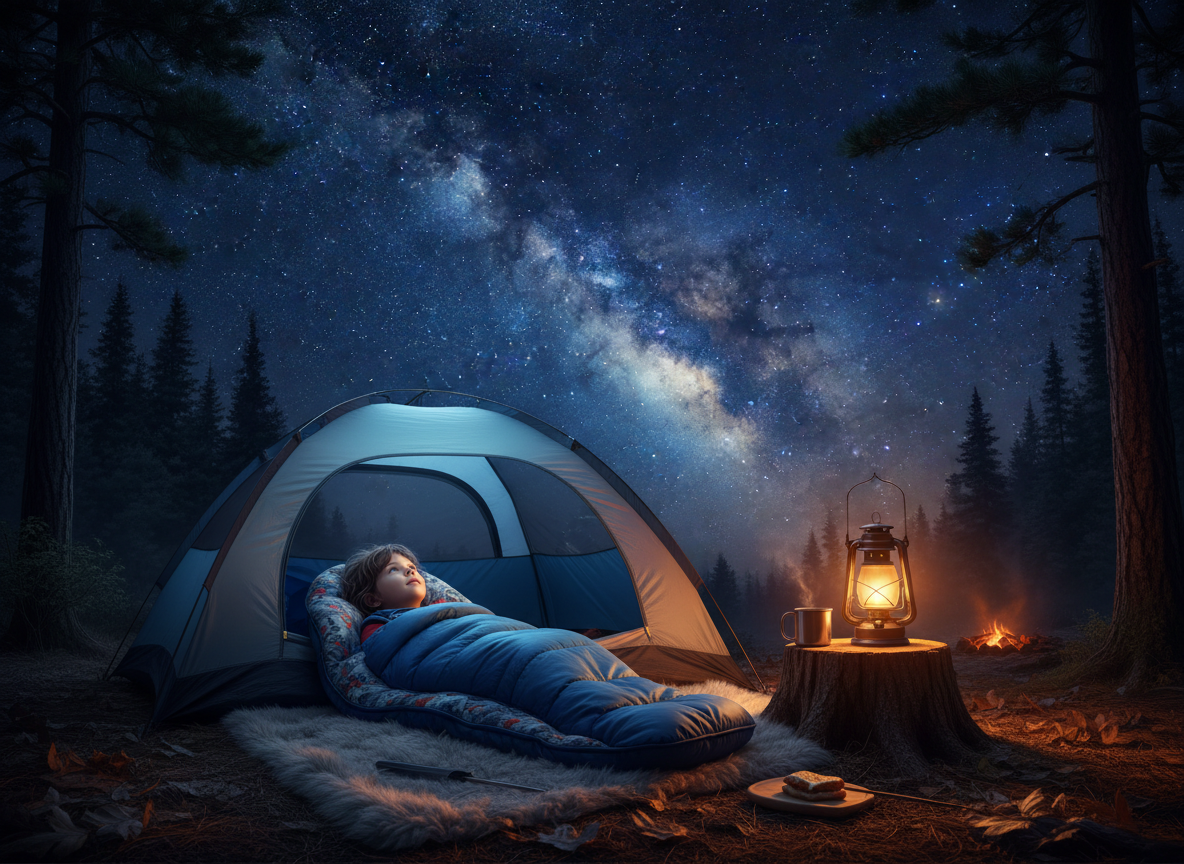
- Stargazing with a kid-friendly app. On a clear night, spread out sleeping pads and use a basic star map app to find the Big Dipper, planets, or satellites. Let kids “host” the star tour for the family.
- Fishing for fun, not perfection. If there’s a safe spot and it’s allowed, let kids try casting a line. Celebrate the process — untangling lines, learning patience — even if you go home with zero fish and lots of giggles.
- Build a fairy house or forest fort. Using only fallen sticks, leaves, pinecones, and rocks, challenge kids to build a tiny “fairy village” or a hideout for forest creatures. Leave everything where you found it and practice gentle, leave-no-trace building.
Safety First (Kid Edition)
Adventure is more fun when everyone knows the ground rules. Keep safety talks short, clear, and kid-level — and then repeat them often.
- Pick a “home base” marker. Choose an easy-to-spot landmark near your campsite — a bright camp chair, the picnic table, or a specific tree — and remind kids that this is where they return if they’re unsure where to go.
- Teach the “hug a tree” rule. If a child realizes they’re lost, they stop, stay put, and “hug a tree” (or rock, or log) until an adult finds them. Moving around makes it harder for helpers to reach them.
- Make sun and bug protection a habit. Sunscreen and bug spray go on every morning, just like brushing teeth. Reapply during the day, especially before hikes and water play.
- Know your water source. Show kids where clean water comes from at camp and remind them never to drink directly from lakes, rivers, or streams without an adult.
- Keep a kid-ready first aid kit nearby. Stock it with bandages, kid-safe pain reliever (if recommended by your pediatrician), antiseptic wipes, tweezers for splinters, and a few fun bandage designs so fixing scrapes feels a little less scary.
- Review water safety rules often. No one goes near water alone. Swimming always means a buddy plus an adult who is watching and not distracted. Life jackets are non-negotiable where required.
Kid-Friendly Gear Worth Packing
You don’t need a truck full of fancy gear to keep kids happy. A few kid-sized items can make them feel prepared, confident, and eager to help.
- Headlamps they can control. Kids love having their own light. Headlamps free up hands for nighttime bathroom trips, story time, and “monster patrol” around the tent.
- Kid-sized camp chairs. A small, comfy chair that’s “just mine” gives kids a cozy spot for s’mores, stories, and morning hot cocoa.
- A personal mess kit. A plate, bowl, cup, and utensils in a small pouch with their name on it turns meals into a ritual. Kids can be in charge of carrying, rinsing, and putting away their own kit.
- Nature journal and colored pencils. Perfect for downtime after lunch or before bed. Encourage drawing bugs, trees, or their favorite moment from the day instead of scrolling a screen.
- Compact binoculars. Even simple kid binoculars can turn a walk into a wildlife safari. Spot birds, boats, squirrels, and faraway campers (from a respectful distance).
- Glow sticks and night-time extras. Toss a handful of glow sticks, bracelets, or small lanterns in your bin. They double as fun and as easy “where’s my kid?” markers after dark.
Embrace the Chaos, Make the Memories
Your kid might sleep in sideways, spill their hot chocolate, and ask 47 questions about the bathroom situation. That’s all part of the story you’ll tell later. Camping with kids isn’t about doing everything perfectly — it’s about being together in a place where dirt is expected, laughter echoes off the trees, and bedtime happens whenever the fire dies down. Pack the basics, take a deep breath, and remember the Camp Coach Joe rule: if you’re not having fun, you’re not doing it right.

